From FedEx Driver to Head Brewer: How Clay Turnbow Crafted a Career in Brewing
What does it really take to become a head brewer at a respected craft brewery—without a science degree, without a traditional food or beverage background, and starting from a FedEx truck?
In this post, we unpack the career journey of Clay Turnbow, Head Brewer at Epic Brewing in Salt Lake City. Clay’s path from English major and delivery driver to leading brewing operations, recipe development, safety, and innovation is a powerful example of career reinvention, craftsmanship, and leadership inside a niche, highly regulated industry.
If you’re interested in turning a passion into a profession, breaking into craft brewing, or simply understanding what it looks like to build a modern career in a technical field, Clay’s story offers rich, practical insight.
From Journalism Dreams to the Brew House
Clay didn’t set out to work in beer. He studied English with a focus on journalism at Weber State University and imagined a life in media. But graduating in 2009, he entered a job market where print journalism was rapidly shrinking and long-term prospects looked grim.
Instead of forcing a path in a struggling industry, he took a job at FedEx as a delivery driver. It was steady work with good benefits—and, more importantly, it gave him mental space.
During long shifts on the road, Clay filled his time with podcasts about brewing. He had already started homebrewing in college, not so much to drink more beer, but because he was fascinated by the science of fermentation, flavor development, and process control.
Over time, what started as a hobby turned into something more serious:
He entered homebrew competitions.
Iterated on recipes.
Educated himself through audio, books, and experimentation.
Eventually, the stable-but-uninspired path at FedEx began to conflict with the curiosity and drive he felt for brewing. Instead of jumping straight into an expensive brewing degree, Clay made a more calculated move:
He saved aggressively, left his full-time job, took roughly a 50% pay cut, and joined Epic Brewing in a part-time, entry-level packaging role to see if brewing could be a sustainable career—before committing to specialized education.
This decision highlights a powerful career principle:
Test the reality of a new field from the inside before you invest heavily in it.
Learning the Craft from the Ground Up
Clay’s progression at Epic Brewing followed a pattern that’s common in breweries and other production environments:
Packaging Line
The final step where beer goes into cans or bottles.
Introduced him to quality control, oxygen management, and the importance of consistency.
Showed how small mistakes at the end of the process can undermine weeks of work.
Cellar Work
Managing beer from the end of brew day through fermentation and conditioning.
Overseeing tank cleaning and sanitation—work that is physically demanding but critical to quality and safety.
Learning yeast behavior, temperature control, and how small process variations affect flavor.
Brew House
Running the mash, boil, and transfer.
Making decisions that define a beer’s core profile: body, bitterness, color, aroma.
Translating recipe concepts into precise, repeatable processes at scale.
By moving through each department, Clay developed a system-wide understanding of how a brewery operates. That full-picture perspective is a big part of why he’s effective in his current role.
Today, as Head Brewer, he intentionally replicates that path for new talent on his team. He prefers to bring people in through packaging, then move them into the cellar, and only later into the brew house. The goal:
Build humility and respect for every part of the process.
Ensure brewers understand how their decisions affect colleagues downstream.
Create “full-stack” brewers who can troubleshoot across the entire production chain.
For anyone interested in building a career in a technical craft, this is a clear takeaway:
Don’t try to skip the “unsexy” roles. They are where your real expertise is built.
What a Head Brewer Actually Does
“Head Brewer” sounds romantic, but Clay’s description of the role shows just how broad and demanding it really is.
1. Recipe Development and Innovation
Clay is responsible for creating and refining recipes that align with Epic’s brand, customer preferences, and market trends. That includes:
Designing flavor profiles from scratch.
Updating existing recipes as ingredient quality, availability, or customer tastes change.
Evaluating new ingredients, hop formats, or brewing techniques.
2. Process, Safety, and SOPs
He also oversees the standard operating procedures (SOPs) that keep both product and people safe. Brewing involves:
Hot liquids at scale.
Pressurized vessels.
Cleaning chemicals.
Recent industry incidents have underscored how dangerous brewing can be when safety isn’t taken seriously. Part of Clay’s daily work is ensuring the brewery runs in a way that keeps employees safe and beer consistent.
3. Quality and Consistency
One of the biggest technical challenges in brewing is controlling oxygen. Yeast needs oxygen at the beginning of fermentation, but once fermentation is complete, oxygen becomes the enemy. It rapidly degrades:
Aroma
Flavor
Shelf life
Clay and his team obsess over minimizing oxygen pickup at the packaging stage, knowing that their beer may sit:
Warm on store shelves
In warehouses
In consumers’ fridges for weeks or months
Despite that, the goal is for it to taste as close as possible to how it did the day it left the brewery.
4. People Management
Perhaps the most unexpected part of the role for Clay was how much of it is actually about leading people, not just making beer.
He spends a significant portion of his time:
Training and mentoring staff.
Setting up team members for success.
Managing schedules and workflows.
Resolving issues and bottlenecks in production.
This is a common reality for anyone who rises to a senior technical position:
At a certain point, your job becomes more about enabling others than doing everything yourself.
5. Maintenance and Problem-Solving
Epic Brewing doesn’t have an in-house maintenance team, so Clay and other brewers have had to self-educate on:
Rebuilding pumps.
Diagnosing mechanical failures.
Handling basic electrical and equipment issues.
In a tight-margin industry like beer, being able to fix your own equipment can be the difference between staying on schedule and losing product, time, and money.
Inside the Brewing Process
For those curious about what goes on behind the scenes, Clay breaks down the brewing process into a clear, high-level flow:
Mashing
Malted barley is milled to crack the grain.
Hot water is added to create a “mash.”
Natural enzymes convert starches into fermentable sugars.
Lautering
The mash is transferred to a lauter tun.
A false bottom inside the vessel allows sugary liquid (wort) to drain off while holding back the grain.
Boiling
Wort is boiled to sterilize it and drive off unwanted compounds.
Hops are added for bitterness, flavor, and aroma.
Historically, hops were also valued for their preservative qualities.
Cooling and Fermentation
The hot wort is cooled.
Yeast is pitched, along with oxygen for healthy cell growth.
Fermentation time and temperature vary by style:
Ales: warmer and faster.
Lagers: cooler and slower.
Conditioning and Packaging
Beer is conditioned to refine flavor and clarity.
It’s packaged into cans, bottles, or kegs with close attention to oxygen levels.
For professionals outside brewing, this is a textbook example of complex process management: every stage depends on precise control and disciplined execution.
Creativity Meets Commerce: How New Beers Are Born
Brewing is often romanticized as pure creativity, but Clay reveals that it’s a blend of inspiration, collaboration, and commercial discipline.
Where Ideas Come From
Clay finds inspiration in multiple places, especially food:
A dish at a restaurant with interesting flavor contrasts.
A meal that makes him think, “This would pair beautifully with a citrus-forward IPA or a clean lager.”
New hop products or ingredients that suppliers introduce to the market.
He also pays attention to industry research through organizations like the Brewers Association, which often highlight new techniques and product formats.
How Ideas Turn into Products
The path from concept to can usually looks like this:
Concept – A flavor profile, style twist, or pairing idea.
Internal Discussion – Clay sits down with the sales and leadership team to decide:
Is there a market for this?
Should it go into state liquor stores or be a taproom-only exclusive?
Ingredient Sourcing – Can the right hops, grain, or adjuncts be reliably sourced at the needed scale?
Testing (When Needed) – Small batch brewing at homebrew scale or adding a new component to a neutral base beer to see how it behaves.
Full Production – Once validated, the recipe is run at production scale, evaluated, and often iterated.
Clay notes that almost any professional brewer can make a “good” beer on the first attempt. The real challenge is the meticulous, iterative work required to make it world-class—the difference between an 80-point beer and a 95–100-point one.
The Hard Parts: Heat, Laws, and the Dark Side of Alcohol
Every profession has realities that don’t make it into the highlight reel. Brewing is no exception.
Physical Demands
Brewing is highly physical work:
Hot, humid environments from large volumes of boiling liquid.
Long hours on your feet.
Repetitive lifting and movement of heavy materials and kegs.
Despite stereotypes of brewers constantly drinking, many are actually quite fit out of necessity.
Regulatory Constraints
In Utah, one of the biggest constraints is the 5% draft law:
Anything over 5% ABV is legally considered “heavy beer.”
Heavy beer must be sold through state liquor stores.
It generally can’t be served from kegs in the same way as lower-ABV draft beer.
This creates daily operational challenges, especially for high-ABV specialty beers that are ideal for small pours from kegs. Instead, they often must be packaged in cans or bottles, which can lead to higher waste and less flexibility in how they’re served.
The Dark Side of the Industry
Perhaps the most important insight Clay shares is about alcohol misuse within the industry itself.
Working around beer all day, with easy access and a culture that often celebrates tasting and experimentation, can be dangerous for those who don’t have a healthy relationship with alcohol.
Clay has seen firsthand what happens when that line is crossed. His perspective is clear: if you want a long-term, healthy career in brewing, you must maintain strong personal boundaries and self-awareness around consumption.
Maintaining Passion: Why You Need Creative Outlets Beyond Work
One of the best pieces of advice Clay ever received from a mentor was this:
When you turn your passion into your job, you must intentionally develop other outlets for your creativity. Otherwise, the pressures of deadlines, quality standards, and commercial realities can erode the original joy that brought you into the field.
Clay has taken that to heart. Outside of brewing, he experiments with:
Coffee roasting
Hot sauce creation (including pineapple-forward recipes)
Baking bread
He and his wife have even formed an LLC for a potential coffee venture—not because they’re chasing immediate growth, but to keep doors open and give structure to their side projects.
The broader lesson applies to any career:
Don’t rely on your job alone to carry all of your creative identity. Diversify your passions.
A Surprisingly Collaborative Industry
Despite being competitors in the same market, Utah’s brewers often act more like allies than adversaries.
Clay describes a culture where:
Breweries happily lend ingredients when another brewery runs short.
Owners personally deliver supplies when needed.
Knowledge and experience are shared, not hoarded.
It’s a reminder that even in crowded markets, collaboration can raise the quality and reputation of an entire ecosystem, benefiting both businesses and consumers.
Actionable Advice for Aspiring Brewers
If you’re serious about starting a career in brewing—or any craft industry—here are practical steps inspired by Clay’s journey:
1. Explore Before You Commit
Visit breweries, ask questions, and observe operations.
Start homebrewing to see if you’re drawn to the process, not just the end product.
Consume industry content: books, podcasts, and resources from organizations like the Brewers Association.
2. Enter at the Ground Level
Apply for roles on the packaging line, as a brewery assistant, or in the taproom.
Treat every job as a chance to learn the system, not just earn a paycheck.
3. Seek Full-System Understanding
Learn how beer flows from grain delivery to package leaving the dock.
Volunteer to help with cleaning, cellar tasks, and basic maintenance.
Ask brewers about how they manage variables like oxygen, temperature, and yeast health.
4. Invest in Non-Brewing Skills
Build skills in communication and leadership—you’ll need them if you want to manage a team.
Learn basic mechanical and electrical troubleshooting for brewery equipment.
Understand local and state regulations, as they heavily influence what you can and can’t do.
5. Set Clear Personal Boundaries
Create personal rules around tasting and drinking on the job.
Be honest with yourself about your relationship with alcohol.
Make time for creative pursuits unrelated to beer, so your entire identity doesn’t hinge on one role.
Final Thoughts: Crafting a Career Like Craft Beer
Clay Turnbow’s journey from FedEx driver to Head Brewer at Epic Brewing isn’t just a story about beer. It’s a blueprint for:
Turning a serious hobby into a profession
Building expertise by starting at the bottom and mastering each layer
Growing into leadership in a way that balances craft, people, and operations
Maintaining integrity and balance in a field that can easily blur personal boundaries
For anyone considering a path in craft brewing—or any passion-driven industry—the key questions aren’t just:
“Can I get into this field?”
They’re:
Am I willing to learn every part of the process?
Am I prepared to do the demanding, unglamorous work?
Can I build a life around this career that keeps me healthy, creative, and curious for the long term?
If the answer is yes, then, like Clay, you may find that your next career chapter is something you can truly craft—one batch at a time.
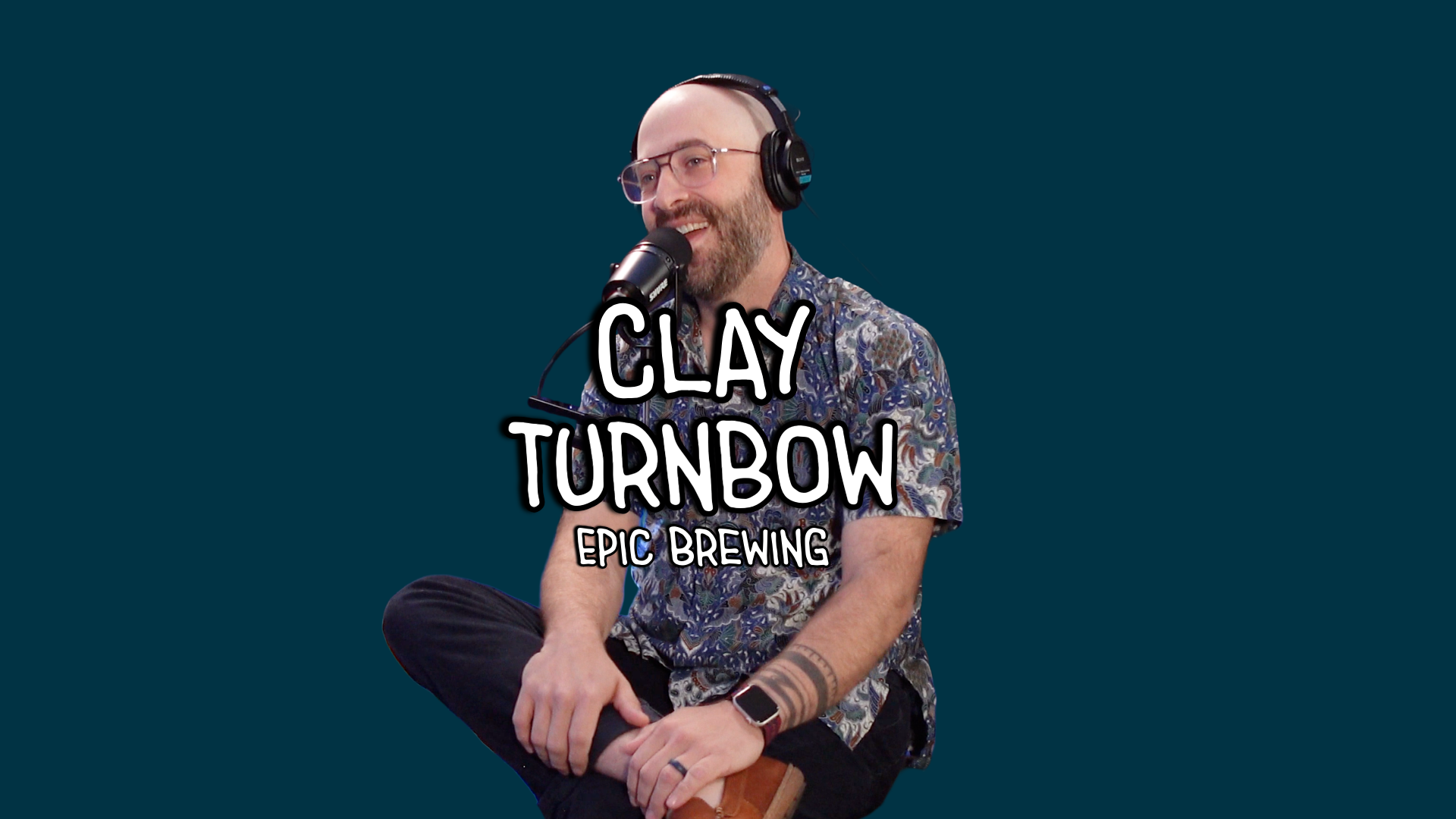
Clay Turnbow - Head Brewer / Master Brewer at Epic Brewing in SLC, UT