From Salon Suite to $2M Brand: Groovy Peach’s Piercing Career Roadmap
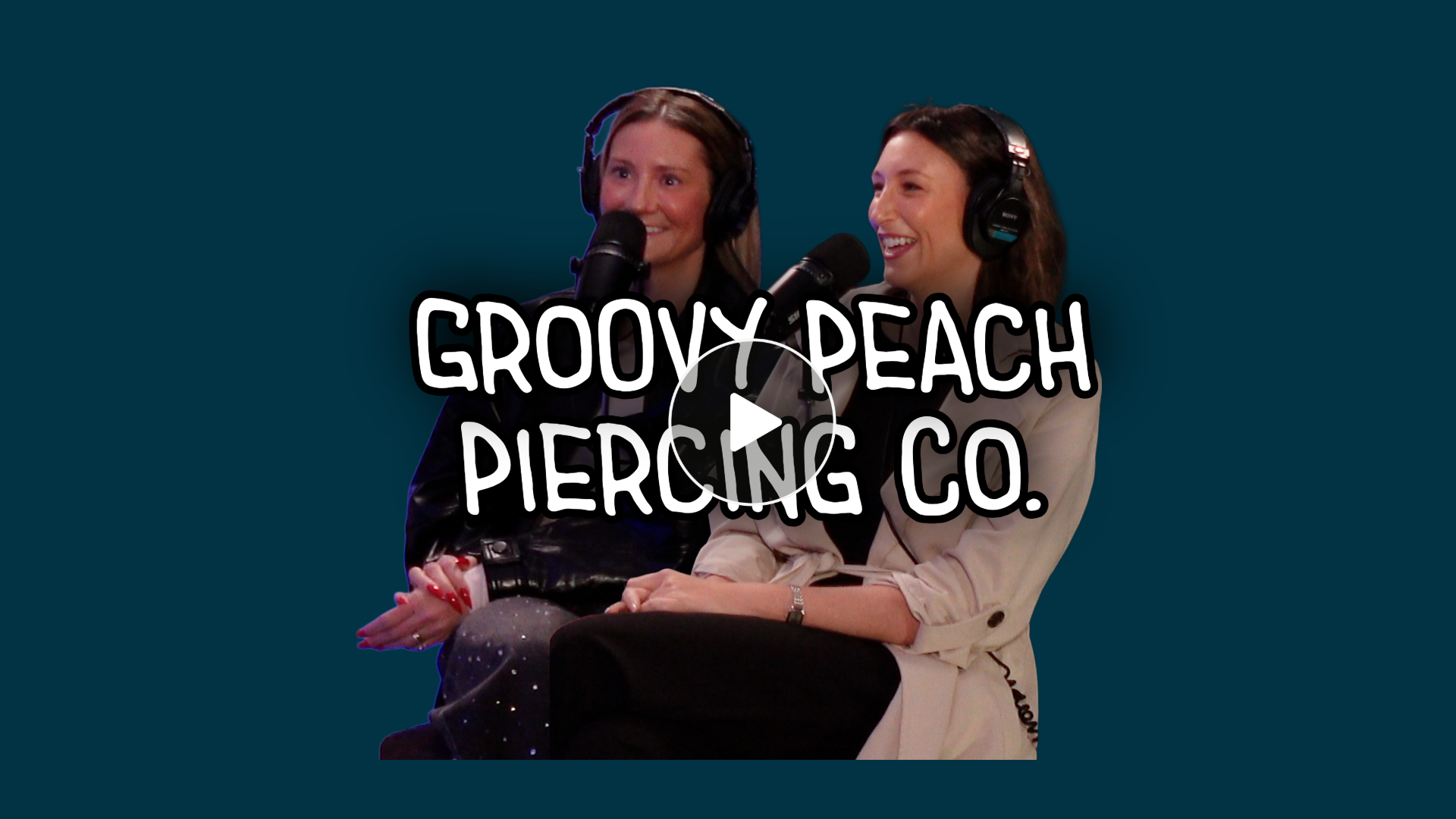
Lindsey & Hailey
Co-Founder & Partner of Groovy Peach Piercing Co
Quick Start Guide: Starting Groovy Peach Piercing Co.
Lindsey and Hailey, who turned a single inspiring piercing appointment and an 80-square-foot salon suite into Groovy Peach Piercing Co., a fully bootstrapped, three-location, ~$2M brand in Utah. Readers learn how they combined healthcare and branding skills, navigated an underregulated piercing industry, built real competency beyond quick “certifications,” and created a family-friendly, experience-first studio. The post outlines their practical playbook, niching into ear and facial piercings, investing in paid apprenticeships and soft skills, handling complications with transparency, and implementing systems like Kanban inventory and an in-house training curriculum, so aspiring piercers and studio owners can follow a clear, modern career roadmap.
What If Your “Side Hustle” Piercing Studio Became a $2M Brand?
What if an 80-square-foot salon suite, a single nose piercing appointment, and a stay-at-home mom’s “next little project” turned into a multi-location, $2M piercing brand—built entirely from scratch?
That’s the story of Lindsey and Hailey, sisters and co-founders of Groovy Peach Piercing Co. in Utah, as told on the Where To Get Started podcast with hosts Colton and Tyler.
Their journey offers a career roadmap for anyone who wants to become a professional piercer, open a piercing studio, or build a differentiated, experience-first service brand.
This blog breaks down their path using the W2GS Journey Framework:
The Spark – how a single piercing appointment started it all
The Pivot – the hard realities of an unregulated industry
The Playbook – the specific steps, skills, and systems they used to scale
Along the way, you’ll see exactly how to follow in their footsteps—without repeating the most painful parts.
The Spark: How Groovy Peach Piercing Got Started
A Nose Piercing That Changed Everything
Hailey was working in interior design and tech/marketing, sourcing products and shaping brands at Alice Lane. Lindsey was a stay-at-home mom with a deep healthcare background—years in hospitals as a phlebotomist, plus studies in nursing before pivoting to Human Development and Family Studies.
Then came the moment.
Hailey booked a nose and lobe piercing with a piercer working out of a small salon suite—a very different experience from the typical Claire’s kiosk or intimidating tattoo shop.
It was:
Smaller and more intimate
Less intimidating
Clearly more customer-focused
But Hailey walked away thinking:
This feels better than Claire’s or a tattoo shop.
It could still be so much better—and way more fun.
She got in her car, called Lindsey, and essentially said: “We have to do this.”
“I remember leaving that appointment, and I called Lindsey, and I was like, ‘Hey, we have to do this.’… It could be a better brand, something where people walk out going, ‘That was really fun, I want to get pierced again.’” – Hailey
Complementary Skills: Healthcare Meets Brand & Creative
From day one, their roles were clear:
Lindsey
Healthcare & safety mindset (lab work, blood draws, hospital protocols)
Comfort with needles, anatomy, and sterile technique
Natural risk awareness and patient-style communication
Hailey
Brand, creative direction, and customer experience
Background in tech, marketing, and sourcing products
Strong sense for aesthetics and environment design
This combination is exactly the blueprint if you want to build a career (or company) in body piercing that goes beyond “just poking holes”:
“I had kind of the creative side of things. And Lindsey had this amazing healthcare side of things, which you very much need for piercing.” – Hailey
They didn’t start with a perfect plan—but they did start with clarity on their strengths and a shared willingness to learn publicly and iterate fast.
The Pivot: Inside an Unregulated Piercing Industry
Discovering There’s (Almost) No Formal Path
When they decided to move forward, Colton and Tyler asked the obvious question: “What does it take to become a piercer?”
The answer was surprising—even to them.
In Utah:
Piercers must follow health department rules and studios need a health permit and inspections.
But there is no state-recognized license or formal certification to be a piercer.
Training is largely unregulated and inconsistent.
Lindsey described the typical path:
Pay thousands of dollars for a 2–4 day “apprenticeship” course
Pierce maybe ~20 people total during training
Be sent off to pierce the public with very limited competency
“Competency is not built in three days of a fast-paced piercing course… I had maybe pierced 20 people. You are not competent after that.” – Lindsey
This was the dark underbelly of the career path:
Little oversight
Minimal structured education
People learning on real clients with very shallow experience
Owning the Learning Curve (Instead of Pretending It Doesn’t Exist)
Lindsey went through one of those short courses because there was no other option. Then she did something most people don’t: she treated that as the beginning, not the end of her education.
Her real training path looked like this:
Self-study: online videos, industry content, regulations
Deliberate practice: Piercing slowly, focusing on safety and transparency
Honesty with clients: Explaining she was still learning and adjusting pricing accordingly
Peer teaching: Once Lindsey gained competency, she gradually trained Hailey
This is a critical mental pivot for anyone pursuing a piercing career:
“Over time, competency was built… I’m a really strong piercer at this point. Now I can confidently say that I do consider myself a master piercer, and same as Hailey—and that takes a really long time.” – Lindsey
The big shift:
They stopped accepting the industry’s low bar and instead set their own standard for education, safety, and experience.
The Playbook: How to Build a Piercing Career & Studio Like Groovy Peach
Step 1: Start with a Clear Niche and Client Experience Vision
Most people think of two options for ear piercings:
Claire’s / mall kiosks – high-volume, low-touch, “in and out”
Tattoo shops – can feel intimidating, not always family- or beginner-friendly
Groovy Peach carved out the third space:
Bright, fun, “dopamine” interiors
Family-friendly and culture-rich
Emphasis on ear and facial piercings (their “bread and butter”)
Deep focus on client experience as the true product
“Most people only get pierced once or twice in their life. We treat that as a really big moment for them and we want to turn that into a core memory.” – Lindsey
If you’re building a career or brand in piercing:
Clarify who you’re for (e.g., families, first-timers, ear curations).
Design an environment and tone that matches that audience.
Decide early what you won’t do (they intentionally avoid “everything” piercings and niche down).
Step 2: Build Real Competence, Not Just a Certificate
Lindsey’s path to mastery is your roadmap:
Get baseline health & safety knowledge
Understand bloodborne pathogens, wound healing, infection risks
Familiarize yourself with local health regulations for body art
Seek initial hands-on training (even if imperfect)
If a structured, high-quality apprenticeship exists in your area, great
If not, treat any paid course as step one, not the destination
Commit to a long runway of practice
Start with lower-risk piercings (e.g., standard lobes)
Be transparent when you’re apprenticing or new to a piercing type
Charge appropriately as you learn and level up
Study relentlessly
Watch procedure breakdowns and critique videos
Read about anatomy, jewelry materials, and healing science
Learn from mistakes (yours and others’) and document lessons
Create or join structured, longer-term training
At Groovy Peach, new piercers now go through months of:
Slide decks and quizzes
Hands-on practice
Grading rubrics and checklists
Their apprentices are paid to learn—not paying for a weekend crash course.
“Our piercers currently train for months… We ramp them up so they can be successful. Client experience is still top of list for us, and that’s what differentiates Groovy Peach.” – Hailey
Step 3: Treat Customer Experience as a Core Skill (Not an Add-On)
Where many piercers obsess only over technique, Groovy Peach bakes soft skills into the career path:
Hiring for energy, empathy, and communication, not just steady hands
Training staff to:
Get down on kids’ level
Read anxiety signals
Take photos, celebrate the moment, and make it fun
Say “no” when a child clearly isn’t ready, even if a parent pushes
“We do not force piercings. If they’re not ready, I’ve said, ‘Hey, seems like she’s probably not quite ready. We want this to be a good experience, not traumatic.’ And parents later thank us for that.” – Hailey
If you want a sustainable piercing career, you must be able to:
Navigate emotions, not just anatomy
Protect clients even when it’s inconvenient
Build trust that turns one-time clients into lifelong fans
Step 4: Learn to Handle the “Dark Side” of Piercing with Integrity
The reality of this career includes:
Complications & aftercare failures
Clients sleeping on fresh piercings, touching them constantly
Infections, excessive swelling, embedded jewelry
Technical mistakes
Missing your mark
Off-angles that need to be redone
Realizing, in your gut, “I didn’t nail that”
“An underbelly is performing a piercing and feeling that drop in your stomach when you realize you didn’t hit your mark… It takes a lot of courage and empathy to own that, fix it, and sit with your failure as a piercer.” – Lindsey
The career-defining skill is not perfection—it’s how you respond:
Own mistakes without deflecting
Fix what you can
Guide people to urgent care when necessary
Learn and refine your protocol
Step 5: Think Like an Operator, Not Just an Artist
Once Groovy Peach gained traction, the career path evolved from piercer to entrepreneur and operator.
Key operational muscles they built:
a) Inventory Management with Kanban
Piercing jewelry means hundreds of tiny SKUs that are easy to lose and hard to count.
They implemented a Kanban (two-bin) system:
Front stock = what piercers pull from daily
Back stock = reserve supply
When front stock empties, that bin moves to “to be ordered”
Weekly, their inventory manager reorders, refills, and rotates stock
This system:
Reduces stockouts
Keeps ordering consistent
Lets them gradually layer in better SKU tracking and sell-through analytics
b) Training as a Scalable System
To scale, they had to solve the bottleneck of training:
Built a full in-house apprenticeship curriculum
Leveraged an LMS with slide decks, quizzes, and rubrics
Structured hands-on training over months, not days
Created clear standards so any new piercer can reach Groovy Peach’s bar
Scaling your own piercing career (or studio) eventually means:
Documenting what you know
Turning instinct into process
Teaching others so the brand doesn’t depend solely on you
c) Phased Construction & Scrappy Growth
From their original 80-square-foot suite at ~$750/month, they’ve grown to:
Three locations – Orem, South Jordan, and Bountiful
Roughly $2M in annual revenue, fully bootstrapped
A new, expanded flagship after taking over the building where they started
One of the most powerful full-circle moments:
They now lease the entire building that once contained their tiniest room—and are knocking down walls to rebuild it as Groovy Peach Piercing Co. headquarters.
“That little tiny space… we are the proud new tenants of that building. It’s now going to be called Groovy Peach Piercing Co. on the outside.” – Hailey
All of this was funded through retained earnings, not outside capital.
Power Quotes from the Episode
“I’m a firm believer in just going with something, giving it a shot, failing, trying again, and continuing to fail. Groovy Peach worked because it came after many, many tries.” – Lindsey
“Things get hard, then they get better, then they get hard again. Our relationship matters most. If we take care of that, we can take care of Groovy Peach, and everyone will be healthy.” – Hailey
“We inspire creativity, growth, and belonging—for our clients and our employees. Piercings represent big milestones and personal growth, and we want people to feel like they belong when they’re with us.” – Lindsey
Beyond the Mic: The Real Career Lesson in Groovy Peach’s Story
What’s implied in Lindsey and Hailey’s story—but not said outright—is this:
Piercing is no longer just a trade; it’s a platform for building modern, people-first businesses.
Their path reframes the “career in piercing” from:
A solitary, technical craft
toA multi-dimensional career at the intersection of:
Healthcare-level safety
Experiential retail
Education and curriculum design
Operations, inventory, and systems thinking
Leadership and culture-building
For you, that means:
You don’t have to choose between being creative, people-centered, and business-minded.
A piercing career can evolve from apprentice to master piercer to trainer, manager, operator, or founder.
The real moat isn’t just how straight your piercings are—it’s the ecosystem of trust, training, and experience you build around them.
If you’re ambitious about this industry, think beyond the chair:
You’re not just doing piercings; you’re designing a culture.
Resource Sidebar: Tools, Terms & Systems Mentioned
Kanban Inventory System – A two-bin, visual inventory method they use to manage jewelry stock efficiently.
LMS (Learning Management System) – Their internal platform for slide decks, quizzes, and structured apprenticeship training.
Shopify / POS Systems – Used to track products, SKUs, and (increasingly) sell-through data for jewelry.
Social Platforms – Instagram, TikTok, Facebook – Primary channels for showcasing brand aesthetic, client experiences, and building community.
Watch the Full Conversation on W2GS
If you’re serious about building a piercing career path or launching a piercing studio of your own, hearing Lindsey and Hailey unpack the details in their own words is invaluable.
Watch the full interview with Groovy Peach Piercing Co. on the Where To Get Started YouTube channel and start mapping out your own roadmap—from first piercing to building a brand.